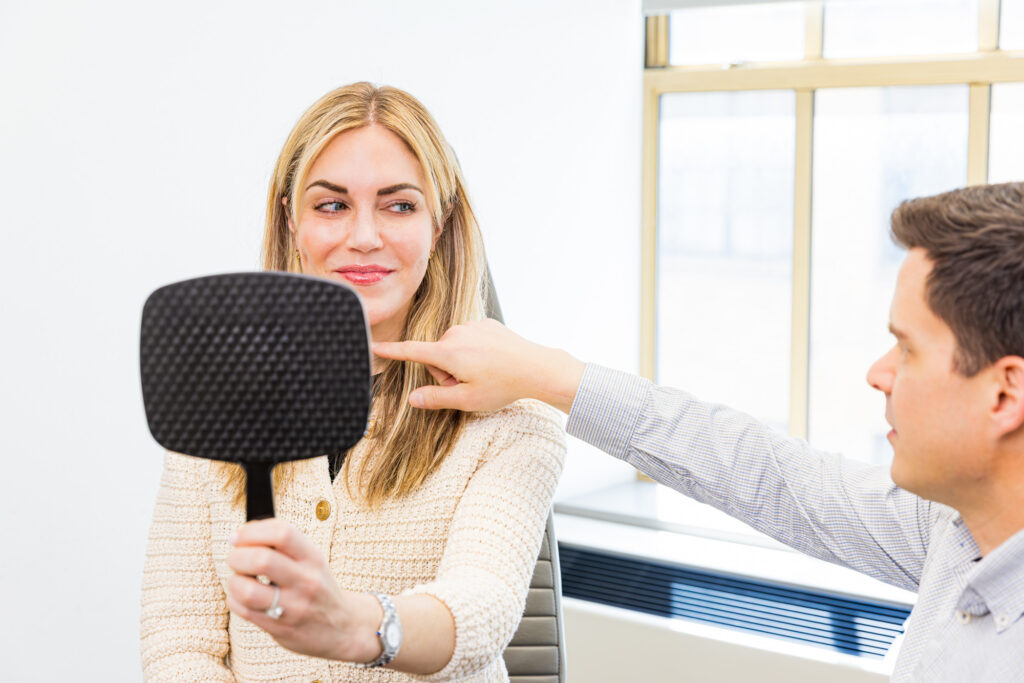

Patients come to Lozada Facial Plastic Surgery in Philadelphia with a photo on their phone and a question: “How do I get rid of jowls?” The edge in that photo marks the boundary between tissue that moved and tissue that stayed. Creams reach the skin’s surface. Facial exercises reach the muscles below. The jowl sits in a layer between them.
Dr. Kirk Lozada is double board-certified in Facial Plastic Surgery and Head & Neck Surgery. During your consultation, after he gets to know you, his next step is identifying which layer moved and guiding you toward treatment that reaches it.
What a Jowl Actually Is
The face stores its fat in separate pockets, each with its own borders. Those borders keep each pocket distinct from the one beside it. In a 2007 article from Plastic and Reconstructive Surgery, authors Rod J. Rohrich and Joel E. Pessa mapped those compartments. They identified jowl fat as the lowest one in the face.
Those pockets sit above a set of anchor points that tie skin to bone along the jaw. When production of collagen and elastin declines, the cheek compartments slide toward the jawline, but the anchor points hold. Tissue above them keeps descending, while tissue below them stays put, and the 2 settle at different heights.
That difference is the edge. A jowl holds a defined shape because something anchors its lower border, which is why it looks like a distinct pad along the jaw. The shadow that forms beneath that border often shows up in photographs taken from the side.
Why Do Jowls Seem to Show Up Overnight?
Jowling develops slowly enough that most don’t immediately notice it. You can think of the effect like watching a pet grow. You see them every day, so you barely notice a change in their appearance. But whenever a friend or family member sees that pet, even after just a few months, they always say something similar to “wow, they’ve gotten so big!”
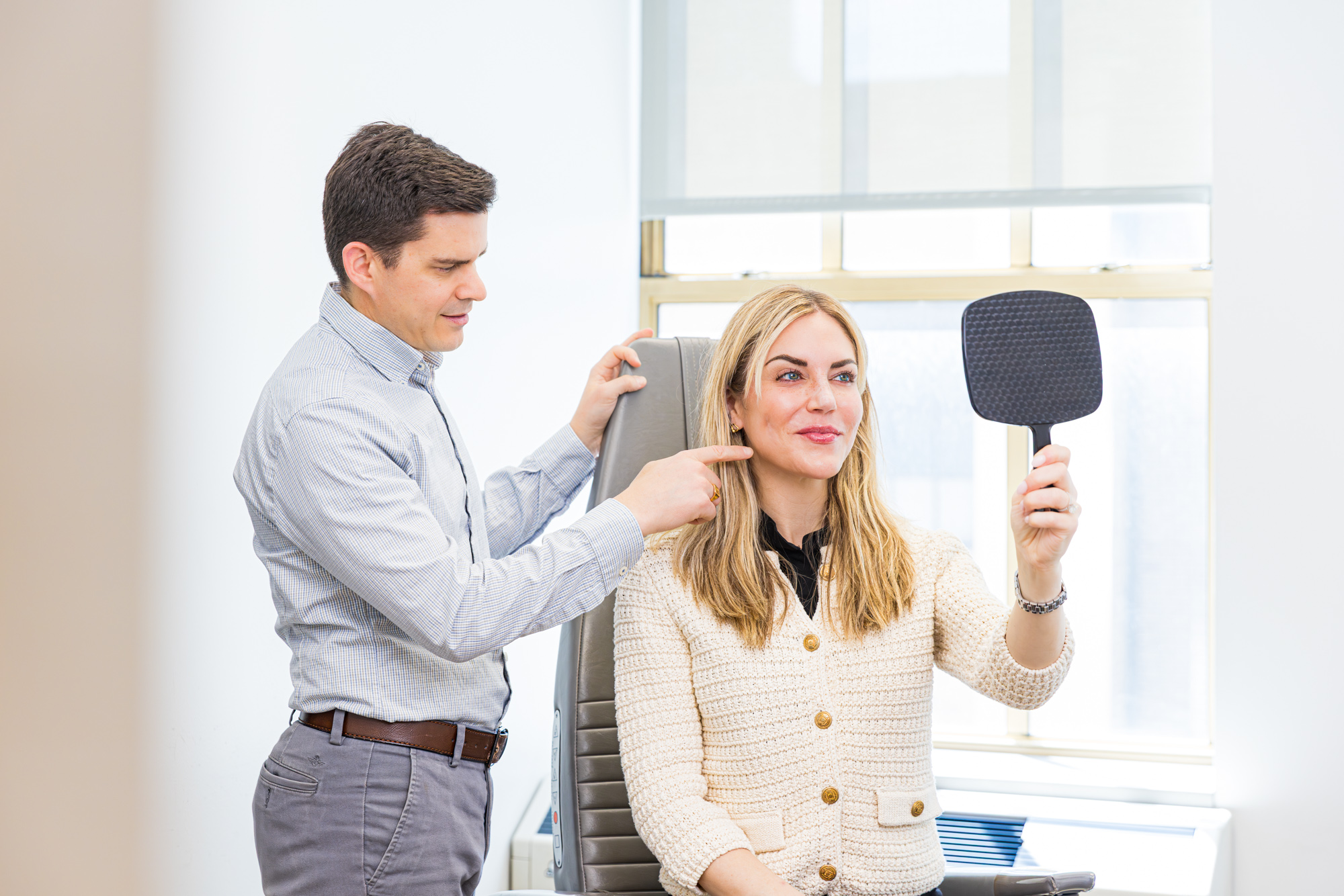
In that same school of thought, you see your face every day, so each small shift blends into the version you already know. Then a photo catches your jaw from below, or a shadow settles under the border, and something that formed over years feels like it arrived all at once.
The shadow is real, and its depth depends on where the camera sits. A phone held low deepens it. Soft, even light eases it. Your jaw has been changing, but the angle you saw it from decided how much of that change you noticed.
What Reaches the Jowl
Two approaches change what you see along the jaw: rebuilding support above the border, or moving the tissue that’s crossed it.
Adding Support Where the Tissue Came From
Volume placed at the cheek and along the jaw border rebuilds the structure the tissue descended from. Lifting the support above the jowl changes the shadow beneath it, which is why careful placement improves definition along the lower face.
At Lozada Facial Plastic Surgery in Philadelphia, Brooke Carrero, RN, BSN, and Marielle Roselli, RN, perform these treatments under Dr. Lozada’s direction. They use the least amount of product needed to get rid of jowls. Non-surgical treatment restores support, and it leaves loose skin and deeper tissue position unchanged.
Moving the Tissue Back
A surgical lift repositions the tissue back above the jaw border and holds it there. The pad along your jaw returns to the position it occupied before, which restores the clean line between your face and neck.
Deciding which operation fits depends on how far the tissue has traveled. If your jaw has softened recently, earlier-stage lifting of the lower face through a mini facelift may be a better fit. Dr. Lozada will tell you what a lift can achieve for you and when another service could be the better option.
Frequently Asked Questions
You have several options for softening the appearance of jowls. Understanding their benefits and limitations can help guide your decision.
Can you get rid of jowls without surgery?
Yes, nonsurgical treatments can make mild jowling less noticeable, especially when you’re looking to soften shadows or improve jawline definition. Results are subtle, and maintaining them may require additional treatments as your face continues to age. For more pronounced sagging, Dr. Lozada can explain the limitations of nonsurgical options and help you understand how to get rid of jowls based on your anatomy.
Do facial exercises, massage, or at-home therapies help reduce jowls?
Massage and at-home therapies like Gua Sha may temporarily reduce puffiness, making your jawline appear slightly more defined.
Facial exercises strengthen and move muscles, but there’s limited evidence that they lift sagging skin or descended facial fat. Understanding these differences helps you set realistic expectations when researching how to get rid of jowls.
Could skin-tightening treatments help improve jowls?
Yes, particularly when you’re noticing early skin looseness around your jawline. Radiofrequency and ultrasound treatments stimulate collagen production, gradually improving skin firmness over several months.
Results tend to be more subtle when deeper facial tissues have already descended. Dr. Lozada can examine what’s causing your jawline to soften and explain whether skin tightening makes sense for your goals as you consider how to get rid of jowls.
Your Features Deserve a Closer Look
Understanding your anatomy helps you make informed decisions. Let Dr. Lozada explain what’s happening beneath your skin and what could help.