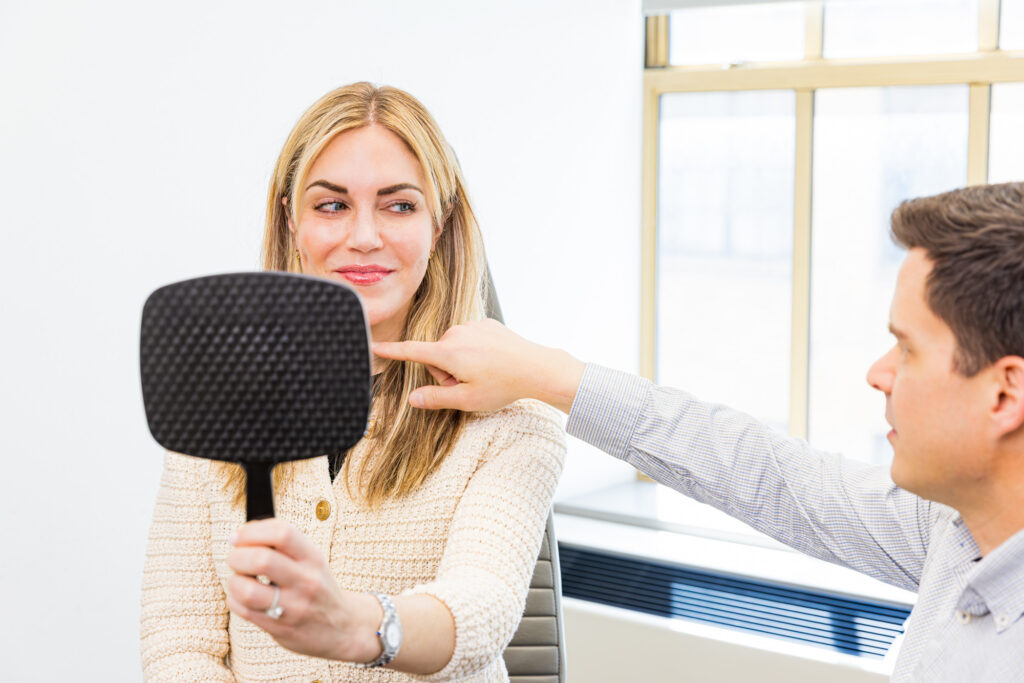

A deep plane facelift repositions the deeper tissues that support your cheeks and jawline. As those tissues heal in their new position, you may experience tightness, numbness, and swelling that changes from day to day.
Dr. Kirk Lozada, a double board-certified facial plastic surgeon in Philadelphia, knows talking about these changes is an important part of preparing patients for surgery and their recovery. His understanding of facial anatomy guides both his surgical approach and his attention to postoperative healing. Knowing what happens during recovery helps you understand the sensations you may experience as your results develop.
Healing Continues Beneath the Skin
In the first days after a deep plane facelift, you’ll begin noticing changes in your cheeks and jawline, even while your face still feels swollen or unfamiliar. Dr. Lozada has repositioned the deeper tissues that support these areas, and they need time to heal and settle. That’s why the improvements you see and the sensations you feel can progress at different speeds.
We tell our patients to plan for about 2 to 3 weeks of initial recovery. Even as bruising fades and you return to your usual routines, some swelling and changes in sensation are likely to continue improving for several months.
Why Your Face May Feel Tight or Numb
Your smile might feel a little stiff at first, or you may notice a pulling sensation when turning your head. This is because swelling around the repositioned tissues can make your cheeks and jawline feel unusually tight. As that swelling eases, everyday facial movements generally begin to feel more comfortable.

You might also notice that the skin near your ears feels different when you touch it. Surgery can impact small sensory nerves, causing feeling to come back slowly, occasionally with tingling or temporary sensitivity. Dr. Lozada tracks these changes during your postoperative appointments and can examine any areas that concern you.
Why Swelling and Facial Symmetry Can Change
You may notice some changes in symmetry after your deep plane facelift. For example, one cheek could appear fuller, or your jawline might look more defined on one side. These fluctuations can happen as swelling gradually subsides, and they can make your appearance seem different from day to day.
Dr. Lozada pays close attention to how your facial contours develop throughout recovery, giving the deeper tissues time to settle as he evaluates your progress. If you notice sudden swelling, especially on one side, or increasing pain, contact his team promptly for an assessment.
Frequently Asked Questions
Every stage of healing brings different considerations. These answers explain how to care for yourself and recognize when you need guidance.
When should I contact my care team during my recovery?
Worsening pain, sudden or rapidly increasing swelling, significant bleeding, fever, or new facial weakness requires prompt medical attention. Please contact us immediately if you experience any of those symptoms. If you experience chest pains or difficulty breathing, seek emergency care immediately.
Your follow-up visits with Dr. Lozada are a chance to discuss how your face is healing, ask questions, and learn when you can safely return to your usual activities. You can also reach out to his team between appointments whenever you have concerns.
When can I return to work after a deep plane facelift?
You should be able to return to work 2 to 3 weeks after treatment. Desk work might be easier to resume sooner, while physically demanding jobs may require additional time. Some swelling could still be visible when you return. Dr. Lozada can help you plan a realistic schedule for your deep plane facelift recovery in Philadelphia.
Can I sleep on my side after a deep plane facelift?
During early healing after a deep plane facelift, sleeping on your back with your head elevated helps manage swelling and reduce pressure on your cheeks, jawline, and incisions.
Side sleeping could put pressure on these sensitive areas, so follow Dr. Lozada’s instructions before changing positions. He’ll assess your recovery during follow-up visits at our office in Philadelphia and help you understand when you can comfortably return to your usual sleeping habits.
Begin With an Honest Conversation
Planning around work, family, or upcoming events? Dr. Lozada can help you understand the recovery time and care your procedure may require.